

 (0)
(0)
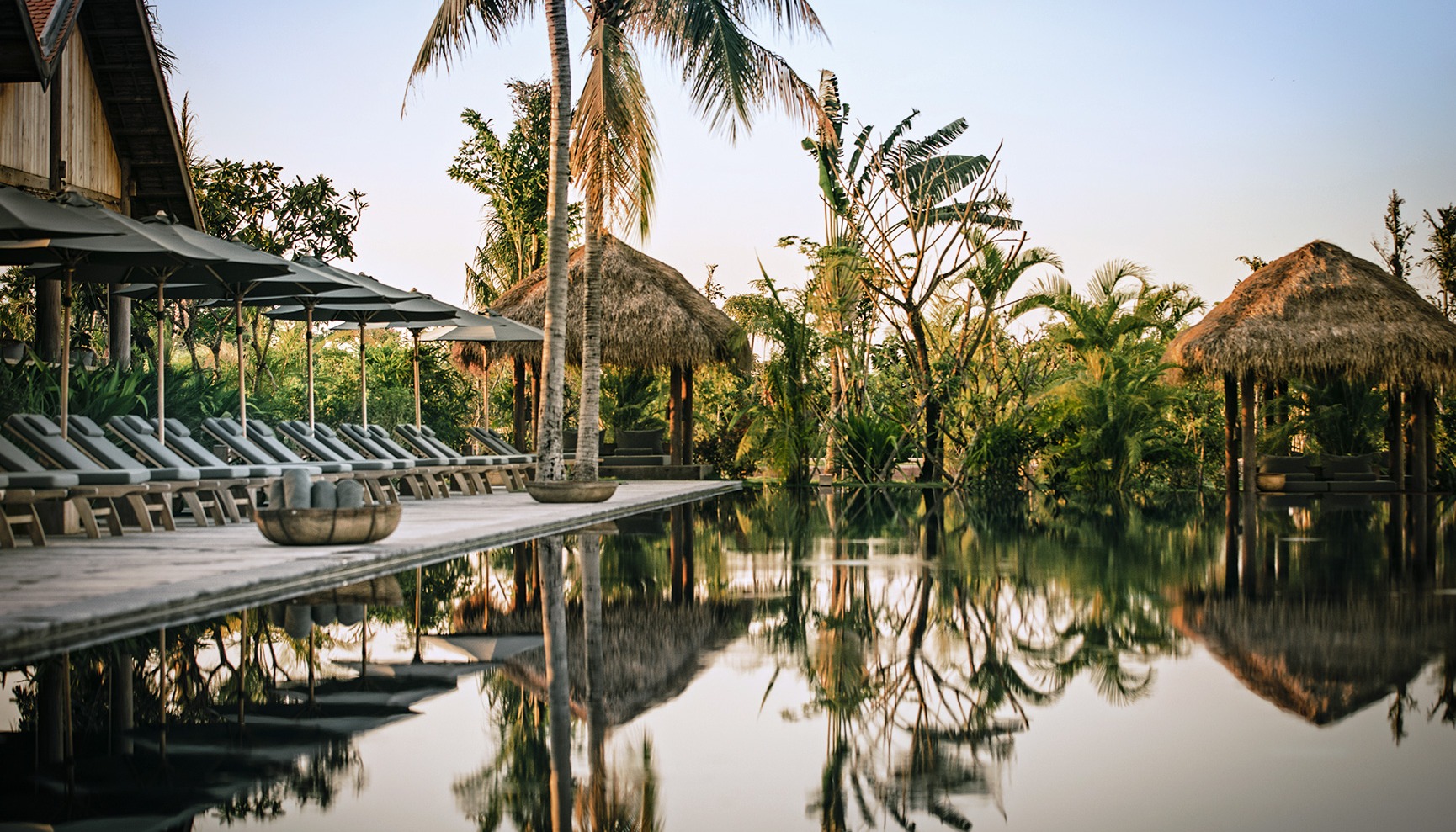
Phum Baitang Hotel
A green oasis at the gates of Angkor
From the outskirts of Siem Reap, the first temples of Angkor already begin to emerge—most famously Angkor Wat, enclosed within its almost mythical rectangular moat. Within the vast grounds of Phum Baitang, an ideal base from which to explore the archaeological site, rice fields define the landscape. Guests settle into villas inspired by traditional Cambodian houses, enjoying five-star comfort immersed in nature.
More than a luxury hotel, Phum Baitang is a “green village”—its name in Khmer. A reimagined ideal village spread across more than three hectares of gardens, plantations and rice paddies, where bicycles glide along wooden pathways and raised walkways. The landscape shifts from soft absinthe tones to golden hues as harvest season approaches. Palmyra palms punctuate the scenery, alongside traveller’s palms (ravenala), while water buffalo still assist with the ploughing of the fields.
At dawn, for the pleasure of the eye alone, staff arrange lotus flowers in weathered wooden trays. Time seems to lose its hold here. The distant roar of tuk-tuks heading towards the ancient temples fades almost instantly, replaced by the sound of palm fronds in the breeze and birdsong carried across the fields.
The Poetry of Traditional Living
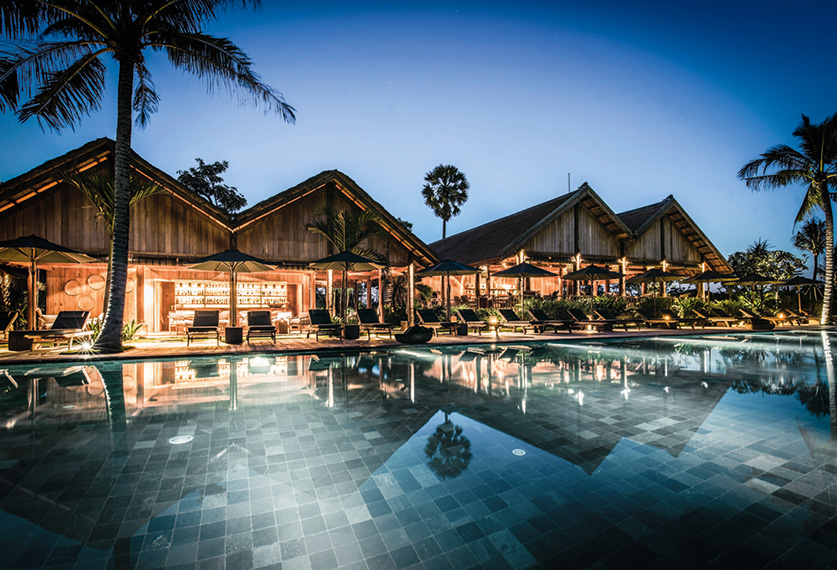
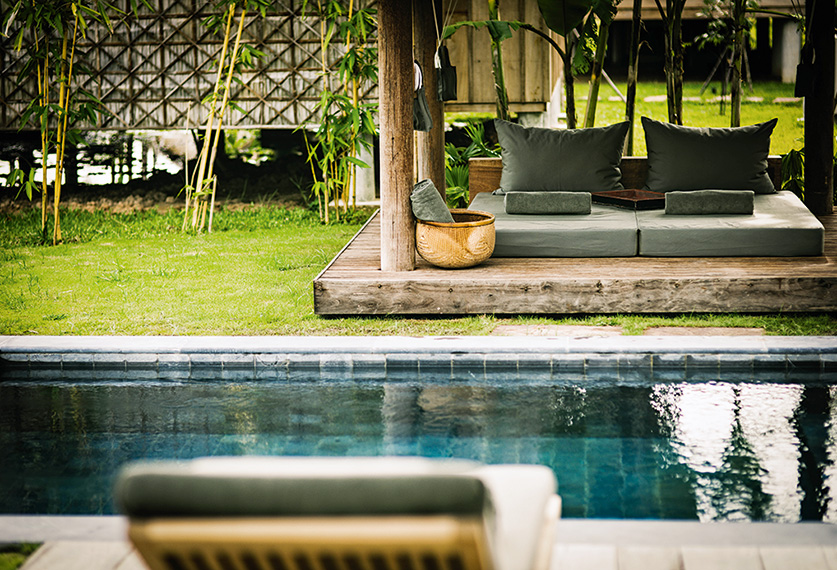
On one side stretches a perfectly straight 50-metre teak terrace lined with sun loungers and sturdy parasols. On the other, the infinity pool flows in gentle curves, reflecting sky and trees as it appears to spill directly into the rice fields beyond. Between these two worlds sits a shaded daybed beneath a thatched pavilion, its light fabric barely moving in the tropical heat.
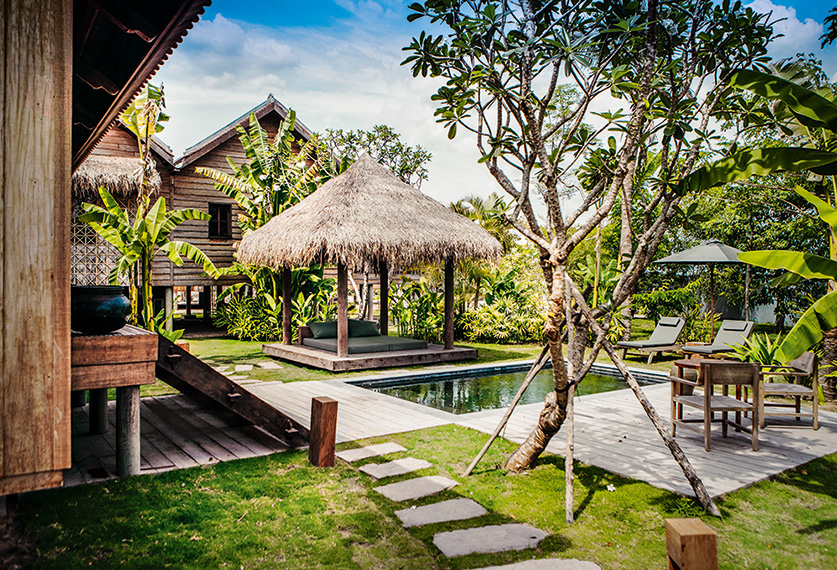
In truth, guests rarely need it. The 45 stilted villas at Phum Baitang all feature private terraces or small gardens with relaxation areas. Twenty of them even come with private pools, their warm waters enclosed within elegant black stone basins shaded by areca palms and heliconias.
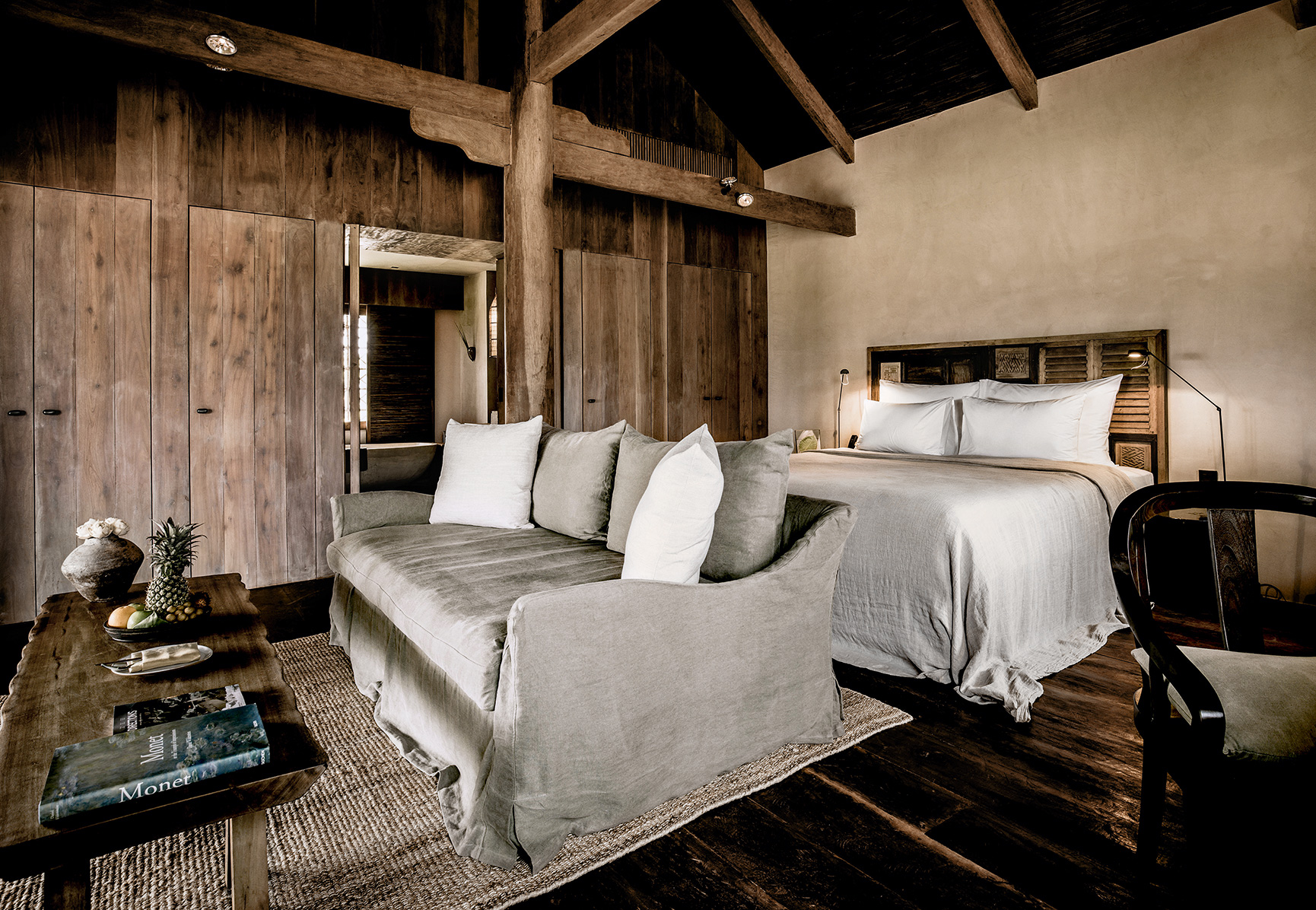
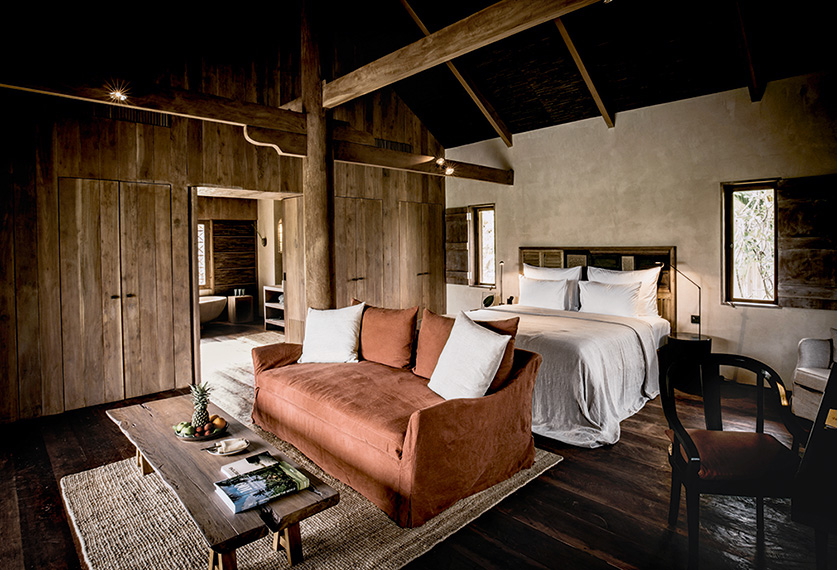
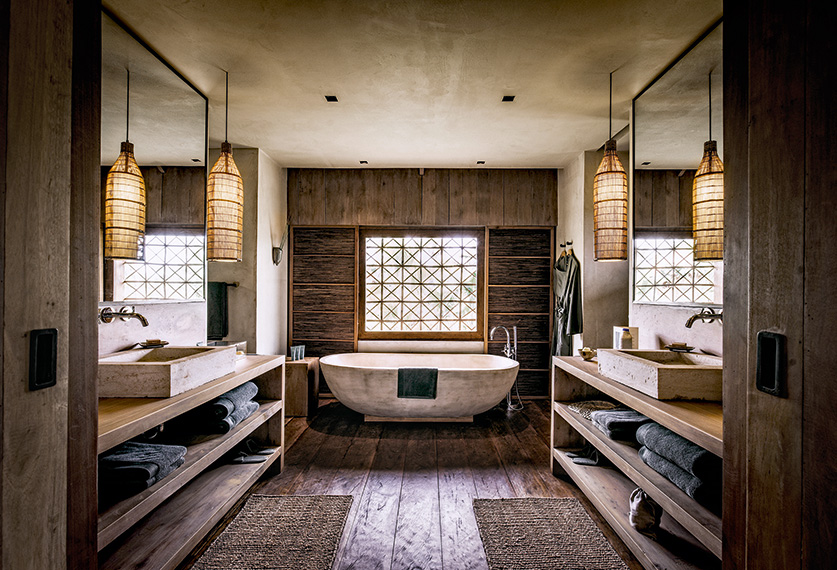
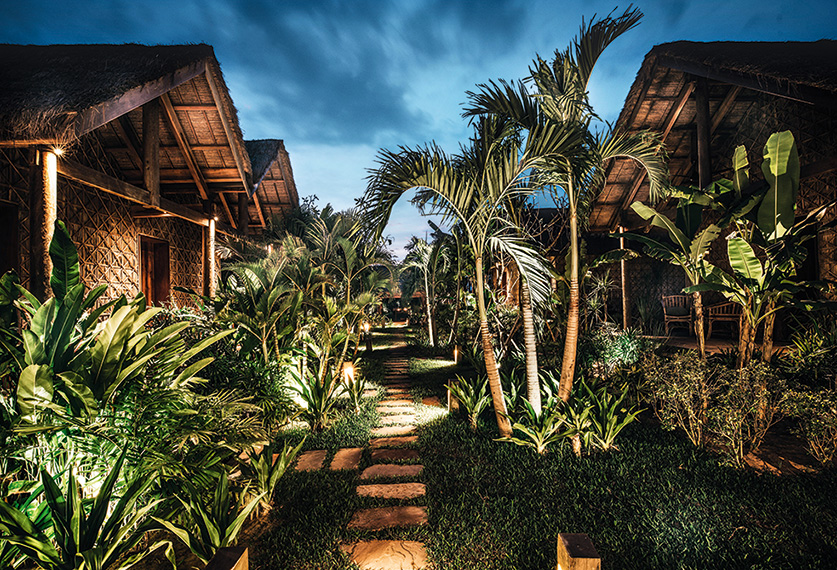
A short wooden staircase leads up to the spacious villas, designed in the spirit of traditional Cambodian homes, enhanced with floor-to-ceiling windows and modern comforts. Wooden columns echo the parquet floors and cathedral-style ceilings, allowing air to circulate naturally. Bathrooms feature romantic freestanding bathtubs and lantern-style lighting, inviting moments of quiet indulgence. At night, the entire estate seems to fade away as traditional wooden shutters are closed.
The Temple of Relaxation
The spa at Phum Baitang truly lives up to its name. Physical tension and urban stress dissolve under expert hands in one of seven spacious treatment rooms. A sauna and hammam—unexpected in this climate—complement a serene relaxation area and a dedicated yoga pavilion.
Stepping across Japanese-style stepping stones, guests reach Bay Phsar, the most authentically Cambodian of the resort’s two restaurants, renowned for its refined traditional cuisine. Here, the menu is not simply short—it is fluid. Rather than fixed main courses, dishes are created in collaboration with the chef. Seafood, meats, noodles and vegetables sourced from the hotel’s garden or a nearby organic farm are transformed into wok dishes, soups or grills according to preference.
Green papaya, soybean sprouts, coriander, chilli, peanuts, freshwater prawns, lemongrass syrup, coconut cream, toasted sesame and increasingly popular pandan all come together in sweet and savoury combinations. Even the rice has grown in the very fields visible from the dining tables.
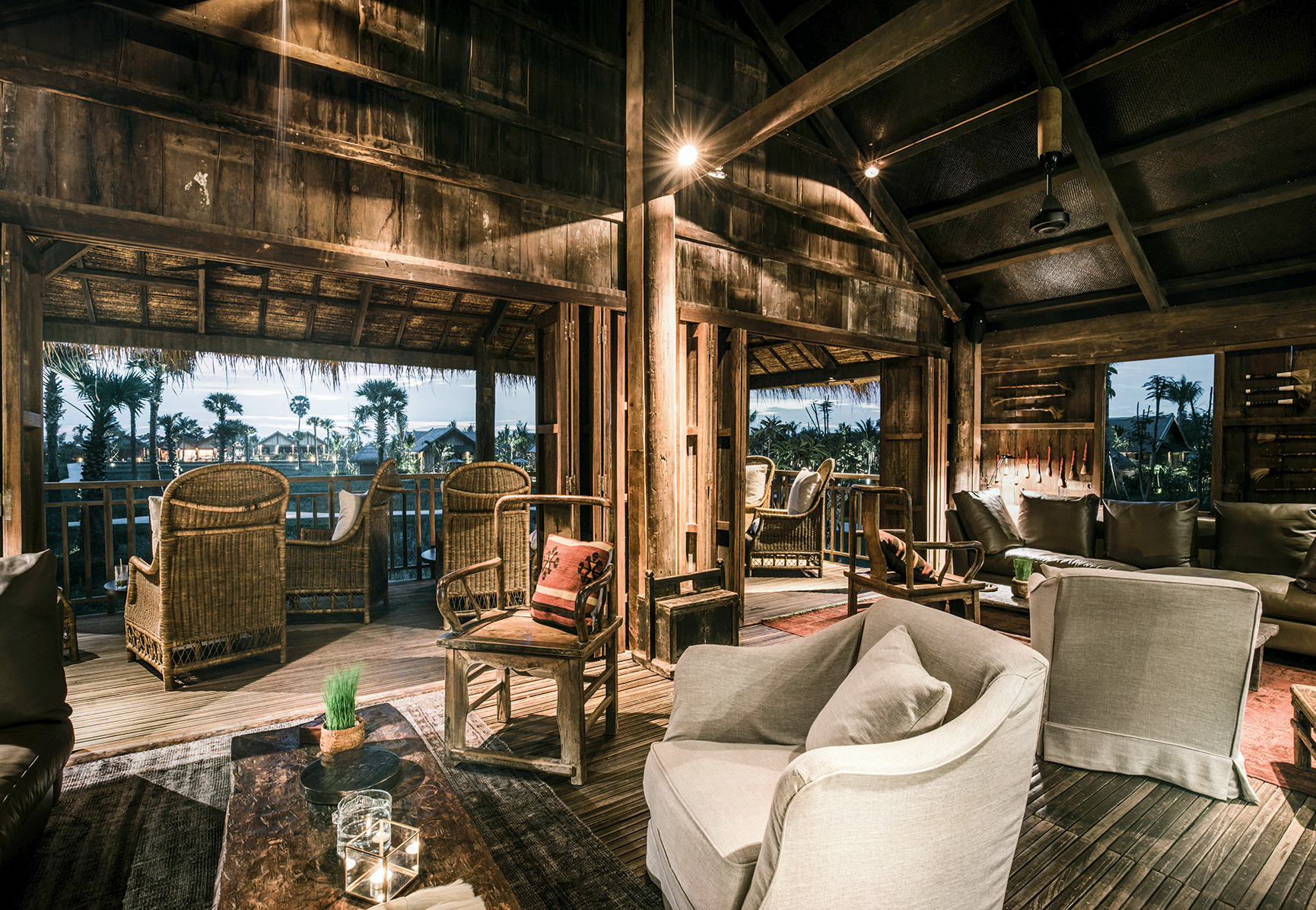
Some guests choose to end the evening at the Cigar & Cocktail Lounge, where a distinctly colonial atmosphere prevails. From there, it is only a short journey back to one’s villa and the promise of deep, restorative sleep—so peaceful that one might almost forget, upon waking, that the temples of Angkor lie just nearby.