

 (0)
(0)
Giants of the Swiss Alps
Dams: heritage and the future of energy
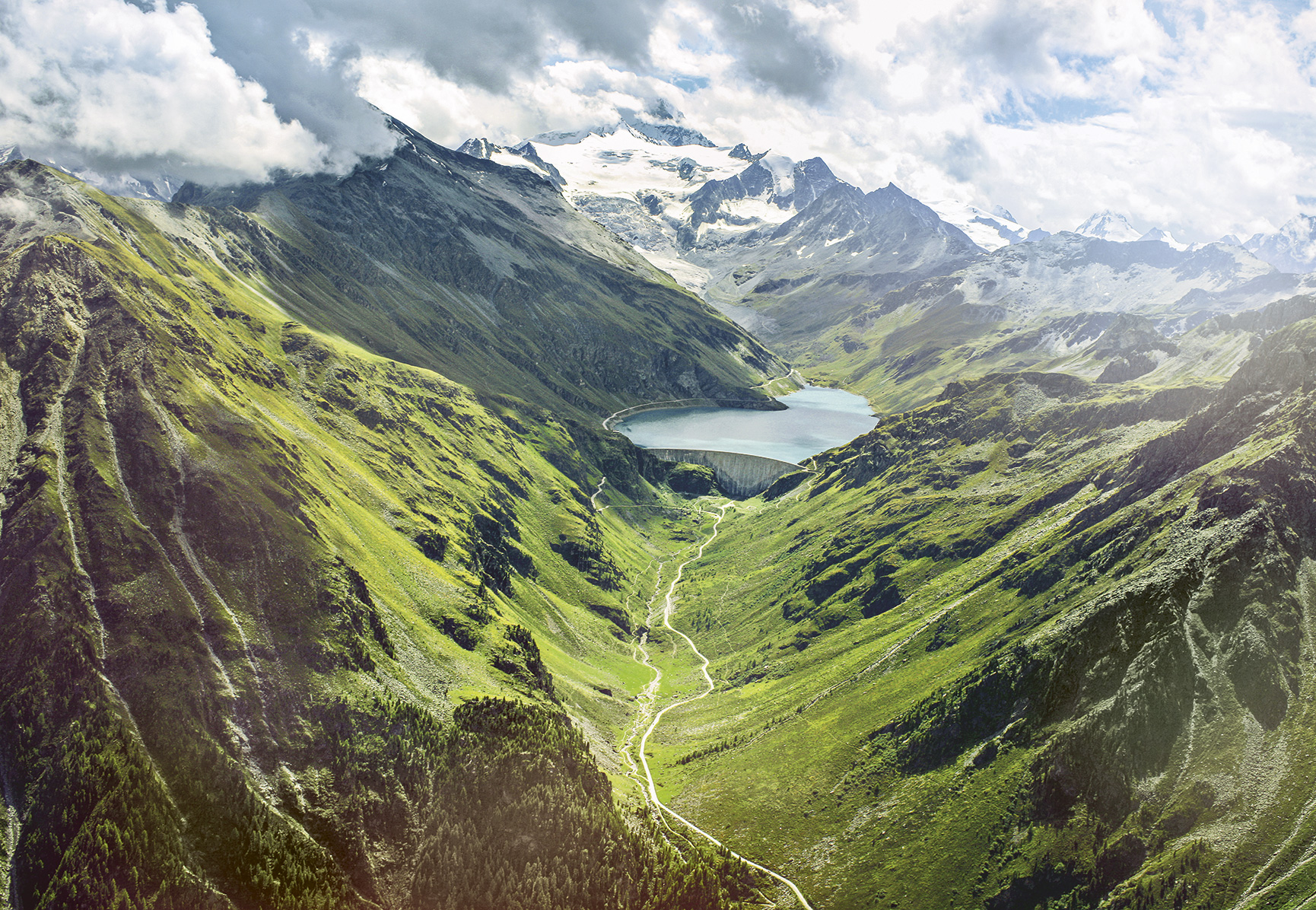
Switzerland: the land of chocolate, watches, banks… and dams. Few people know it, but this country has the highest density of dams in the world, which includes run-of-river structures and, above all, storage dams. For decades, this infrastructure has shaped both the Swiss landscape and the country’s energy identity.
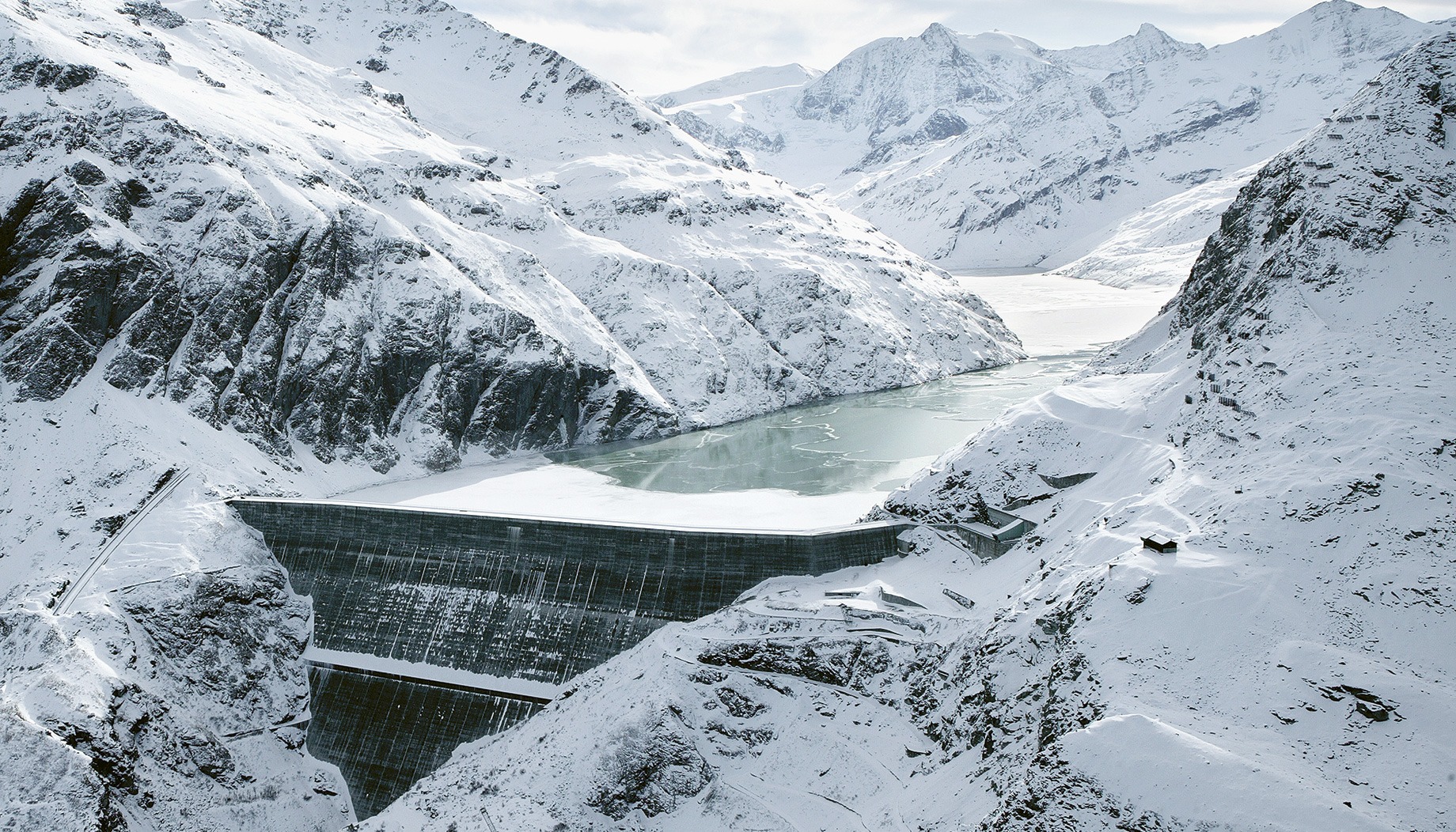
The history behind the country’s hydraulic power really began to accelerate in the mid-20th century, when Switzerland, in a visionary and bold move, began to pursue unprecedented modernization. After the end of the Second World War, rising consumption and electrification meant that new means of production were required. Taking advantage of its unique topography and rich glacial reserves, Switzerland commissioned around a hundred large dams within just 20 years, mainly in the canton of Valais — which is home to Europe’s largest concentration of glaciers.
The “blue gold” rush
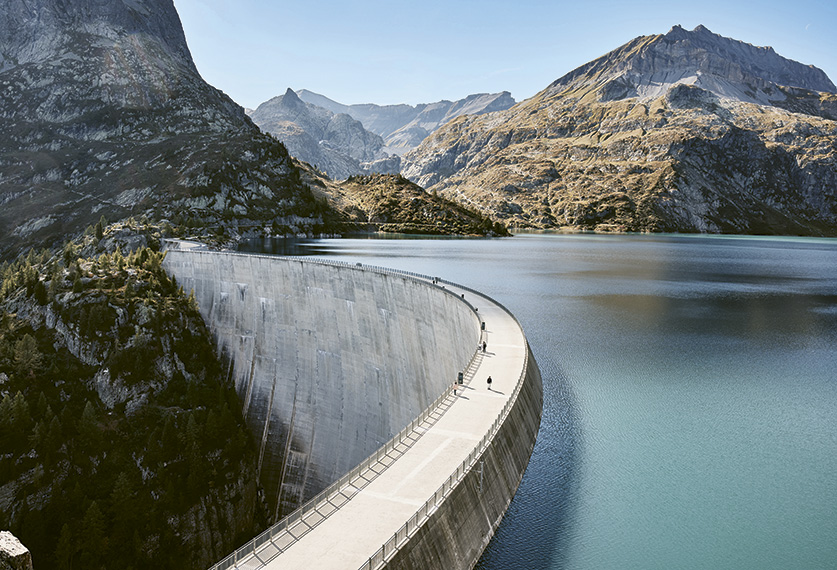
The long-isolated Alpine valleys suddenly found avenues for new prosperity. The work sites attracted vast numbers of labourers: thousands of Swiss and foreign workers came to contribute to building these monumental projects. For the Émosson Dam, which was commissioned in 1975, nine out of ten workers were Italian. In parallel, infrastructure was expanding nationwide: roads, housing, cable cars, bridges — all of which contributed to the growth of Alpine tourism.
But there was a dark side to this growth. Entire villages were submerged, ecosystems were disrupted and many workers lost their lives. The worst accident occurred at the Mattmark Dam construction site in 1965, when a glacier tongue collapsed onto workers’ barracks, claiming the lives of 88 people.
Swiss-Made Innovation
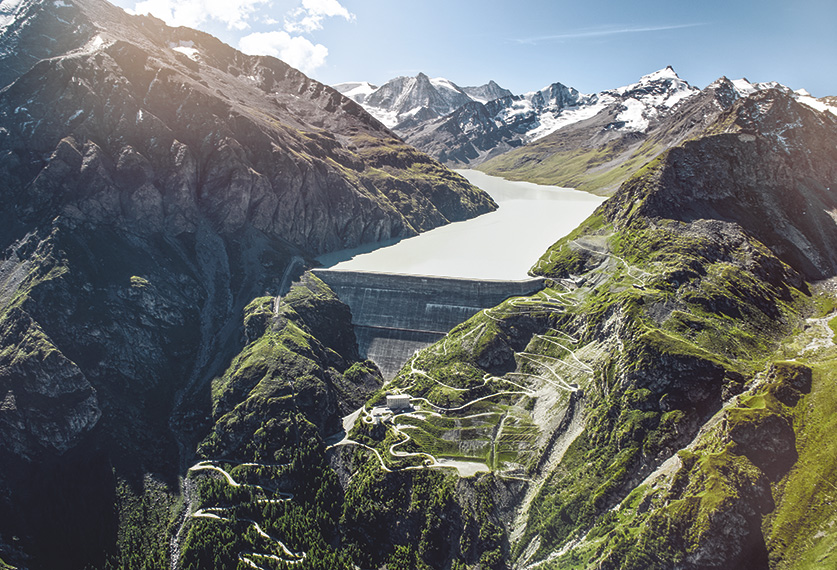
Today, there are 222 large dams in Switzerland, which have evolved to become symbols of engineering excellence, innovation and national pride. These dams, along with the smaller infrastructure involved in the complete hydropower process, provide Switzerland with virtually emission-free electricity. Until the early 1970s, hydropower supplied nearly 90% of Switzerland’s electricity. Although activating nuclear power plants brought that percentage down to around 60% today, hydropower remains the backbone of the country’s energy system, and Switzerland ranks sixth in Europe in terms of installed hydropower capacity.
From design and engineering to operation and maintenance, Switzerland masters the entire chain of expertise in this domain and exports its technical innovations globally to places like Norway, China and South America.
Because hydropower requires significant investment, its funding is based on a public or semi-public model, with the primary contracting authorities and developers being cantonal or municipal administrations, along with electric utility companies (which are often publicly owned). The success of this model revolves around key hydropower concessions: companies are given the right — by a canton or municipality — to use a watercourse for electricity production for limited periods, generally 80 years. In exchange, the operator pays fees and transfers ownership of the dam to the public once the concession period comes to an end.
An uncertain future
Switzerland committed to gradually phasing out nuclear power and increasing renewable production in its 2050 Energy Strategy, which was approved by voters in 2017. In order to meet rising energy demands while also compensating for the closure of nuclear plants, a historic round-table discussion with cantons, operators, and environmental organizations began in 2020. It selected 16 hydropower projects — deemed “energetically promising and ecologically acceptable” — to benefit from new facilities, raised dam walls, expanded reservoirs, and extended pump-storage systems for improved energy storage and grid balancing.
But the future of Swiss hydropower now faces new challenges. Suitable location sites have become scarce, approval procedures are lengthy, and profitability is uncertain in an electricity market where prices remain relatively low. Another serious concern is that the first concessions are approaching their end, which means the future governance of these concrete giants will need to be redefined. What company would invest hundreds of millions of Swiss Francs in a dam that has uncertain ownership rights and residual value?
Climate change has also become another increasingly important factor. Large dams are primarily fed by glacial meltwater and require hydrologic balance in order to regulate water flow, prevent floods and secure water reserves during (increasingly frequent) droughts. Scientists now predict that half of Switzerland’s glaciers will disappear by 2100, risking the future utility of the dams… while, paradoxically, making them even more essential. The Gornerli reservoir project in Valais, a flagship of the round-table discussion, illustrates the challenge of reconciling energy production, water management and protection of nature.
Reinventing the balance
Even though voters overwhelmingly approved a 2024 law aimed at boosting domestic renewable electricity production, administrative delays, local opposition, and environmental or landscape concerns still hinder many projects. However, in late September 2025, Parliament adopted a “law to accelerate procedures”, designed to simplify planning and authorization for renewable energy projects of national interest. Whether these measures will be enough to convert political intent into tangible progress remains to be seen.
So, what does the future have in store? If the electricity agreement between Switzerland and the European Union enters into force, it could open new prospects — like integration into the European electricity market or greater value for pumped-storage power — but it could also lead to a potential loss of flexibility in managing and leveraging Switzerland’s hydropower resources. Only time will tell whether the country can harmoniously combine energy independence, respect for nature and the legacy of its “water cathedrals” — these monuments of the past that continue to power the future.