

 (0)
(0)
Geneva’s Jet d’Eau
The city’s signature
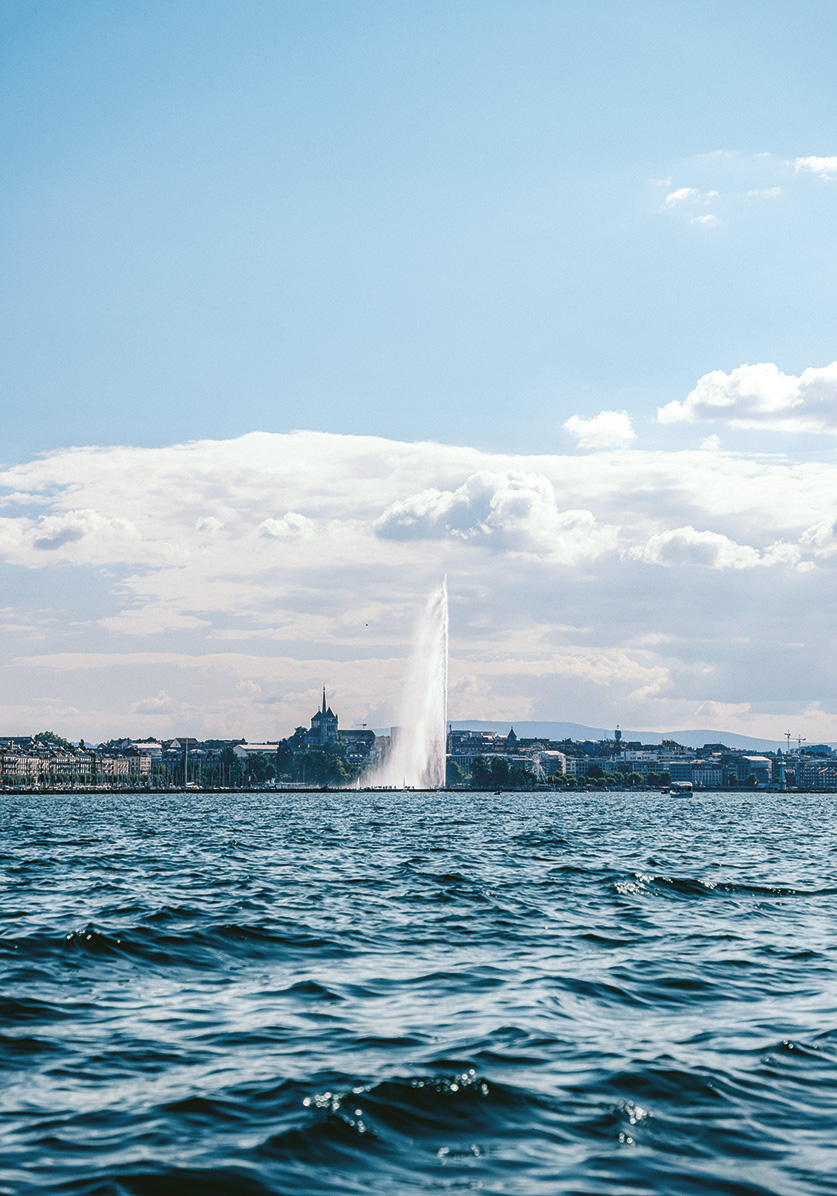
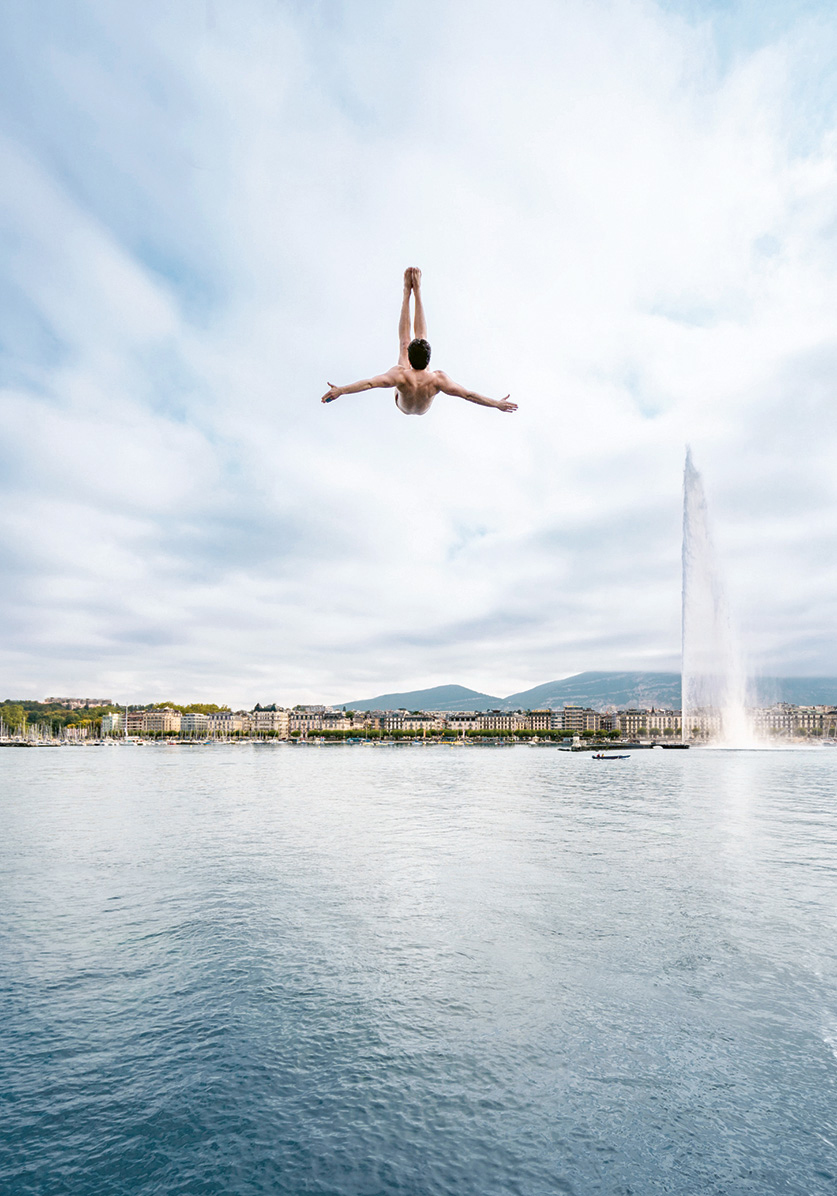
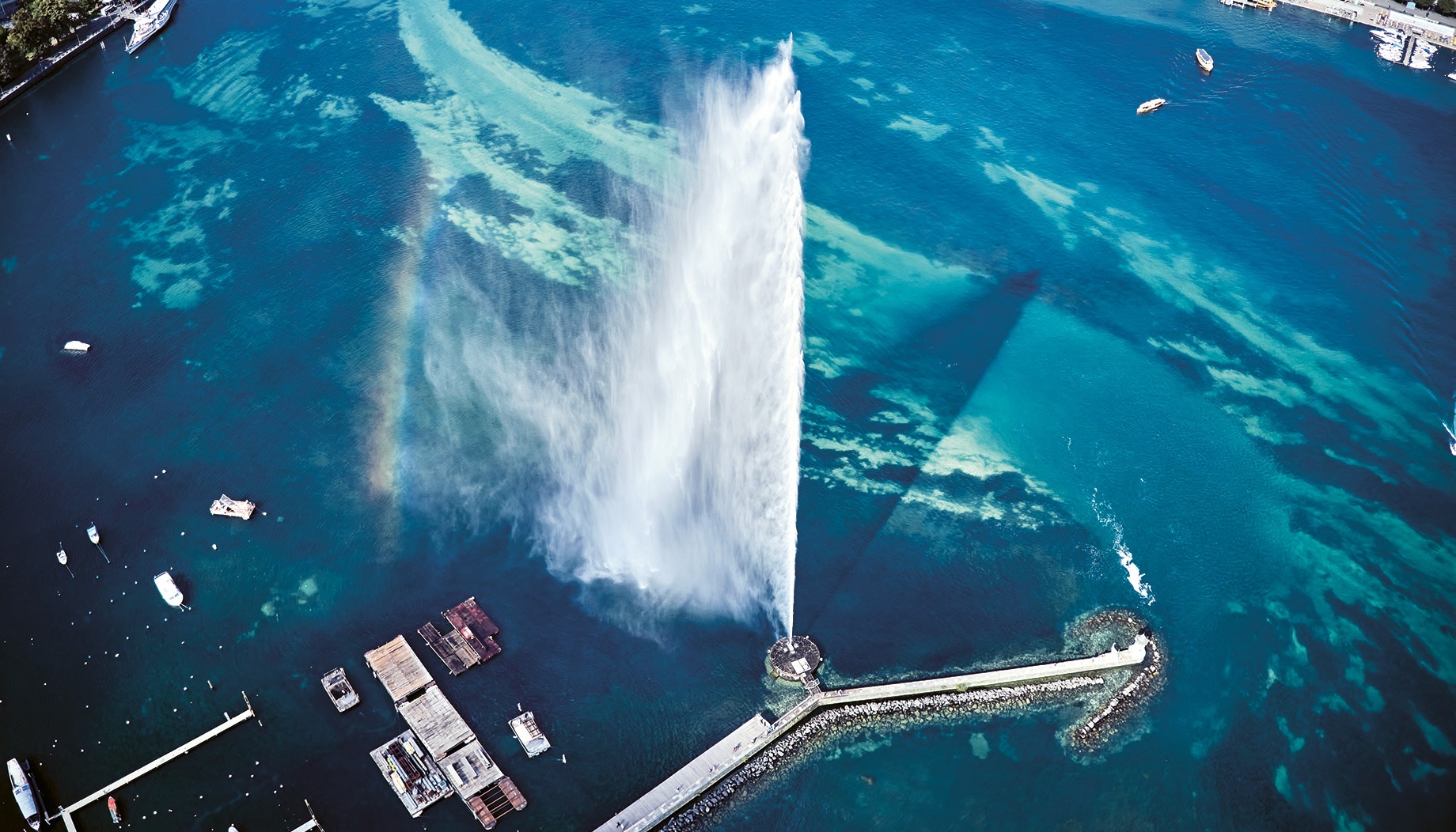
Born of an industrial necessity, the Jet d’Eau has become the emblem of Geneva: a technical feat that symbolizes the city’s growth and dynamism, but also an expression of urban poetry… and a guaranteed shower for those who get too close.
When sprayed into billions of particles, the water of the Jet d’Eau becomes an all-encompassing cloud, like standing in the middle of a waterfall. To experience it up close, simply follow the boardwalk… and run the risk of getting wet.
At the end of the 19th century, Geneva’s industrial boom saw a hydro power plant built along the Rhône, at La Coulouvreniere, to provide water for the city’s inhabitants. But when demand dropped at night, pressure built up in the water. To avoid any damages, a safety valve was opened to release the water pressure…
And the Jet d’Eau was born! The fountain’s 30-metre-high spray quickly became a local attraction. Although it was no longer necessary just a few years later, the city chose to preserve it and moved it to a new location at the end of the Eaux-Vives pier, in the heart of the bay. It shot up to 90 m high, with four lateral branches resembling a tree, and was illuminated for the first time on 1 August, 1891, to mark the 600th anniversary of the Swiss Confederation.
In 1951, the present Jet d’Eau was installed, redesigned to pump lake water instead of city drinking water. The spray reaches a maximum height of 140 m, a European record! Seven tons of water and microscopic air bubbles are suspended within the plume at any given moment. To shoot up so high, 500 litres of water is pushed out of the pipe at almost 200 km/h every second, creating a plume that lasts 16 seconds. A beautiful but technically complicated achievement.
Dramatically dotting the Geneva skyline both day and night, the white halo of the Jet d’Eau only pauses its stream in cases of violent winds or freezing temperatures, when it might otherwise become a snow cannon. Before 2003, the fountain was shut off for four months every year. Today, only five guardians — all volunteer retirees from the Services Industriels de Genève (Geneva Industrial Services) — watch over the fountain, deciding when it will (or will not) operate and ensuring it functions properly.