

 (0)
(0)
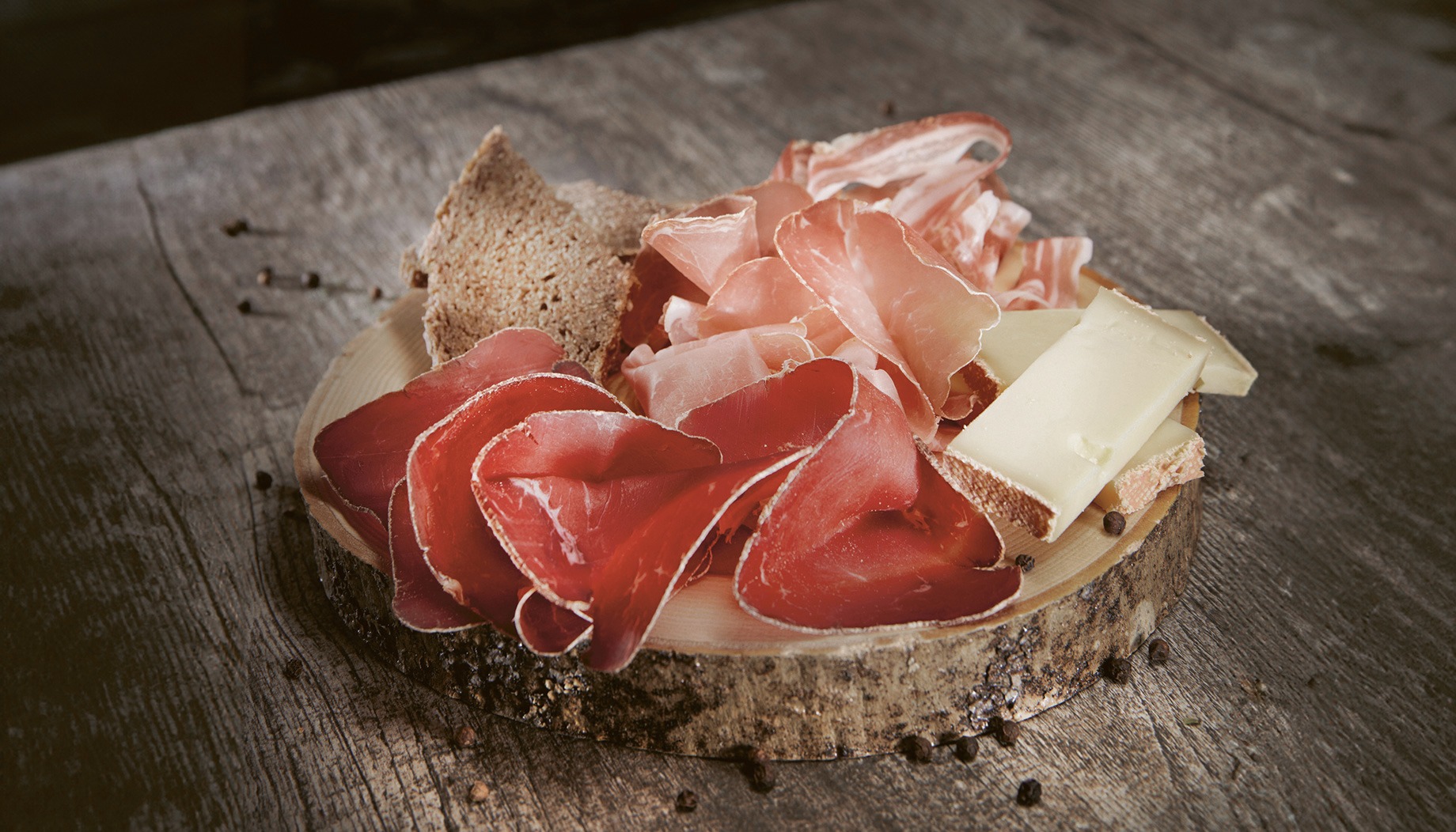
The art of the long game
Stories of charcuterie
The secret? The foehn. This warm wind, capable of melting snow in no time, is also a precious ally… to local butchers! It’s much appreciated in Chermignon, where the Bagnoud family has been producing dried meats for over a century.
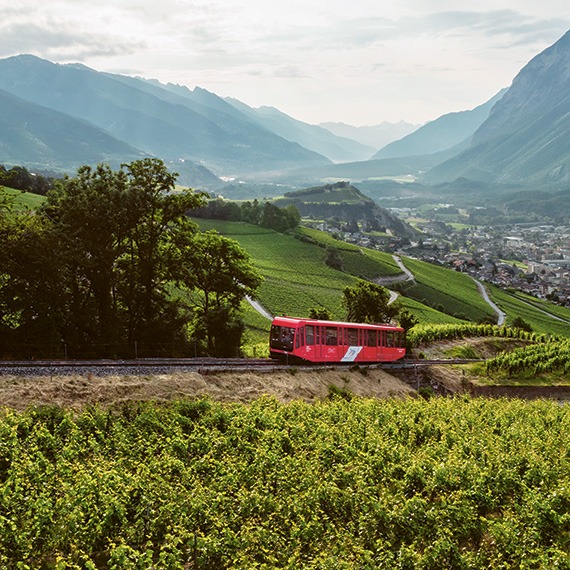
Suspended between sky, forest and vineyard at over 1,000 metres in altitude, the village of Chermignon is home to a discreet yet fragrant treasure: its meat-drying facilities. On a northern slope facing the generous Italian sun, the strong foehn winds here create an ideal arid microclimate that have made the area one of the country’s most favourable terroirs for drying meat — one of Valais’ most iconic culinary traditions.
400 years of expertise
The earliest records of dried meats from Valais date back to the 1550s. Produced here even then without fire nor smoke, beef rump was marinated in a mixture of salt, herbs and around ten spices. It then underwent a slow air-drying process in specialised wooden barns (raccards), which were exposed to the winds of the alpine pastures. Sounds simple? Certainly not. Too much humidity and the meat spoiled. Too little and it dried out.
In the 1950s and 1960s, the practice became professional amongst a handful of companies. A leading name in the sector, Cher-Mignon was founded in 1967 by the village butcher Jean-Louis Bagnoud, whose father had already been producing dried meats since 1910.
In 1975, the company acquired a drying facility designed by architect Vincent Mangeat, co-founder of Lausanne’s École Spéciale d’Architecture. The award-winning and bold building was quickly nicknamed “the cathedral” after a misunderstanding with a few Dutch tourists. They thought they had stumbled upon a contemporary church and asked to visit! By extension, the company’s largest drying loft is known as the “basilica”.
Inside the drying lofts
Although the company came under the umbrella of Bell Food Group (Coop) in 2023, a third generation Bagnoud still keeps watch. The process remains resolutely artisanal, with “the meats passing through the hands of our loyal staff in around 25 stages”, explains Sébastien Studer, the company’s director. Each cut of meat is coated with a secret blend of salt and some ten organic aromatic herbs, the details of which are known by only three people! It’s then left to rest in brine for two to three weeks — being turned regularly to ensure even absorption of the flavours — before maturing in the “cathedral” for three weeks, and then in the “basilica” for four months (at slightly different humidity levels). It is this long and carefully crafted process that has earned Valais’ dried meats their Protected Geographical Indication (PGI) status, “proof of strong identity”, which is now adamantly upheld by a cantonal professional association.